

Alexandrine Fish Sauce
Updated: Jun 29
Recipe
[225]
[437] ALEXANDRINE [1] SAUCE FOR BROILED FISH
IUS ALEXANDRINUM IN PISCE ASSO
PEPPER, DRY ONIONS [shallots] LOVAGE, CUMIN, ORIGANY, CELERY SEED, STONED DAMASCUS PRUNES [pounded in the mortar] FILLED UP [2] WITH VINEGAR, BROTH, REDUCED MUST, AND OIL, AND COOK IT.
[1] Alexandria, Egyptian city, at the mouth of the river Nile, third of the three great cities of antiquity excepting Carthage during Apicius’ time a rival of Rome and Athens in splendor and commerce. Most important as a Mediterranean port, where fishing and fish eating was (and still is) good.
[2] G.-V. mulsum, mead.
Historical Context
My first recipe that I will be doing is an Alexandrine sauce for a broiled fish. This recipe is found in the 10th book of Apicius, labeled The Fisherman. The sauce comes from, as the name suggests, Alexandria, Egypt, one of the three great cities, standing in the same ranks as Carthage in Tunisia and Rome in Italy.
During the 1st century BCE and the first century AD, Alexandria was an important city in the Mediterranean as it acted as a major trading hub close to the Middle East and Rome. It was also important as Alexandria was the capital of the Ptolemaic Kingdom, most notably headed by Cleopatra, when Rome took over Egypt in 30 BC following her and Marc Antony's defeat at the Battle of Actium, by Octavian (Emperor Augustus) and his legions. Now back to the recipe, which Cleopatra herself might have dined on.
Cooking Experience
The sauce includes many ingredients that are commonly used today, such as oregano, cumin, celery seed, shallots, and pepper, to name a few, which were readily available in my garden and my spice cabinet. The sauce also contains some more niche ingredients, including lovage, an herb in the same family as parsley.

Due to the near impossibility of finding lovage, I decided on using parsley instead. Another ingredient that the recipe called for was Damascene Prunes. While I was able to find prunes at the grocery store, they were not prunes sourced from Damascus. The use of this ingredient shows how influential the Roman and Mediterranean trade network was, calling for prunes from an exact region. This idea is also seen in the other ingredients used in the dish, not only combining Middle Eastern flavors with cumin and prunes, but also Roman flavors using lovage and oregano, both found on the Italian peninsula.
The final, more exotic ingredient that the recipe called for was Mulsum. Mulsum is a fermented wine and honey mixture often used in Roman cooking. I created my own form of Mulsum by using half a bottle of white wine along with a quarter cup of raw honey.
The recipe called for me to mix, using a mortar and pestle (seen on the right) all of the dry ingredients, which I then later added the wet ingredients to. Once all of the seasonings and dry ingredients were mixed and put in a shallow pan, I added the wet ingredients, including Mulsum, olive oil, white vinegar, and bone broth.

Once again, this recipe from two thousand years ago did not specify direct amounts, so I added about what I thought was right. After adding all these aspects together, I let the sauce reduce down and the alcohol cook off to thicken it a little.

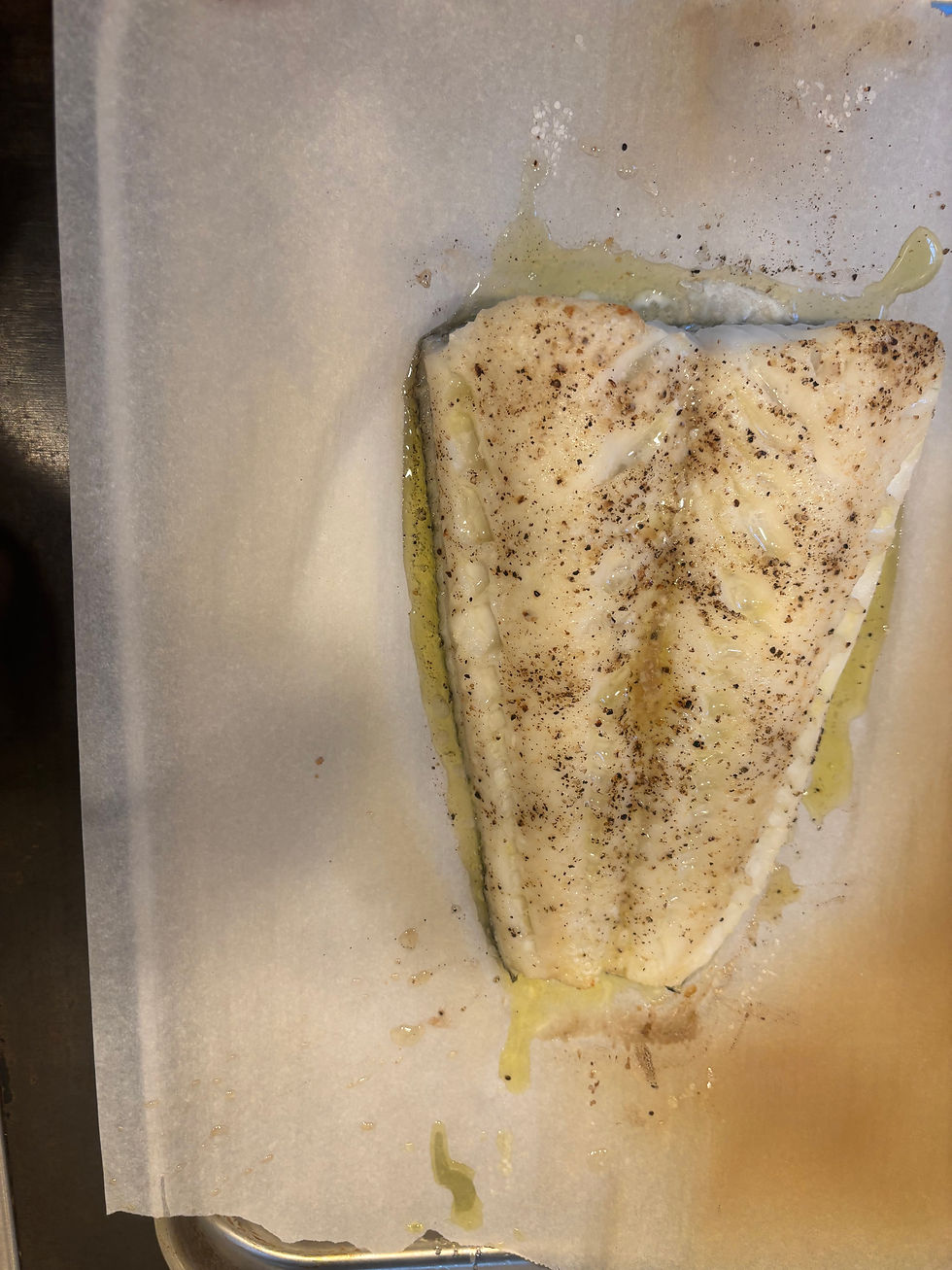
At this same time, I broiled the Sea Bass, which was lightly seasoned with salt, pepper, and the seasoning was bound on with olive oil. This was another creative freedom I took: since there were no specifications on which fish to use, I decided upon sea bass, as it was easily accessible to me, along with being a common fish caught and eaten in Alexandria during antiquity.
SO how was it?
Once the fish was done, which took about 15 minutes at 400 degrees, the sauce had also finished up and was ready to be plated. I cut the fish into thirds so that my family and I could enjoy it, and then served it with the sauce.
The sauce was quite sweet because of the prunes and the Mulsum; however, not to the point where it overpowered the other aspects of the recipe. The cumin really came through strong and cut through the sweetness, adding that herby and tangy flavor that you associate with many North African and Middle Eastern dishes. The prunes had reduced to become these perfect, little gelatinous bites, melting in your mouth as you took a bite. The sauce overall tasted very good and would be something I would cook again.

This recipe highlighted the struggle of how often, when cooking these recipes from Apicius and other sources, I will have to use my best judgment on the amounts of different ingredients. On the other hand, this recipe also demonstrated the importance of Roman food culture in our own cooking culture today. Every one of the ingredients or a form of them listed I either had already at my house, or was a short drive to the store to acquire. These ingredients that were used by the Ancient Roman and Egyptians are still very prevalent in our food culture today, showing the true scale and influence of these ancient empires.

Comments